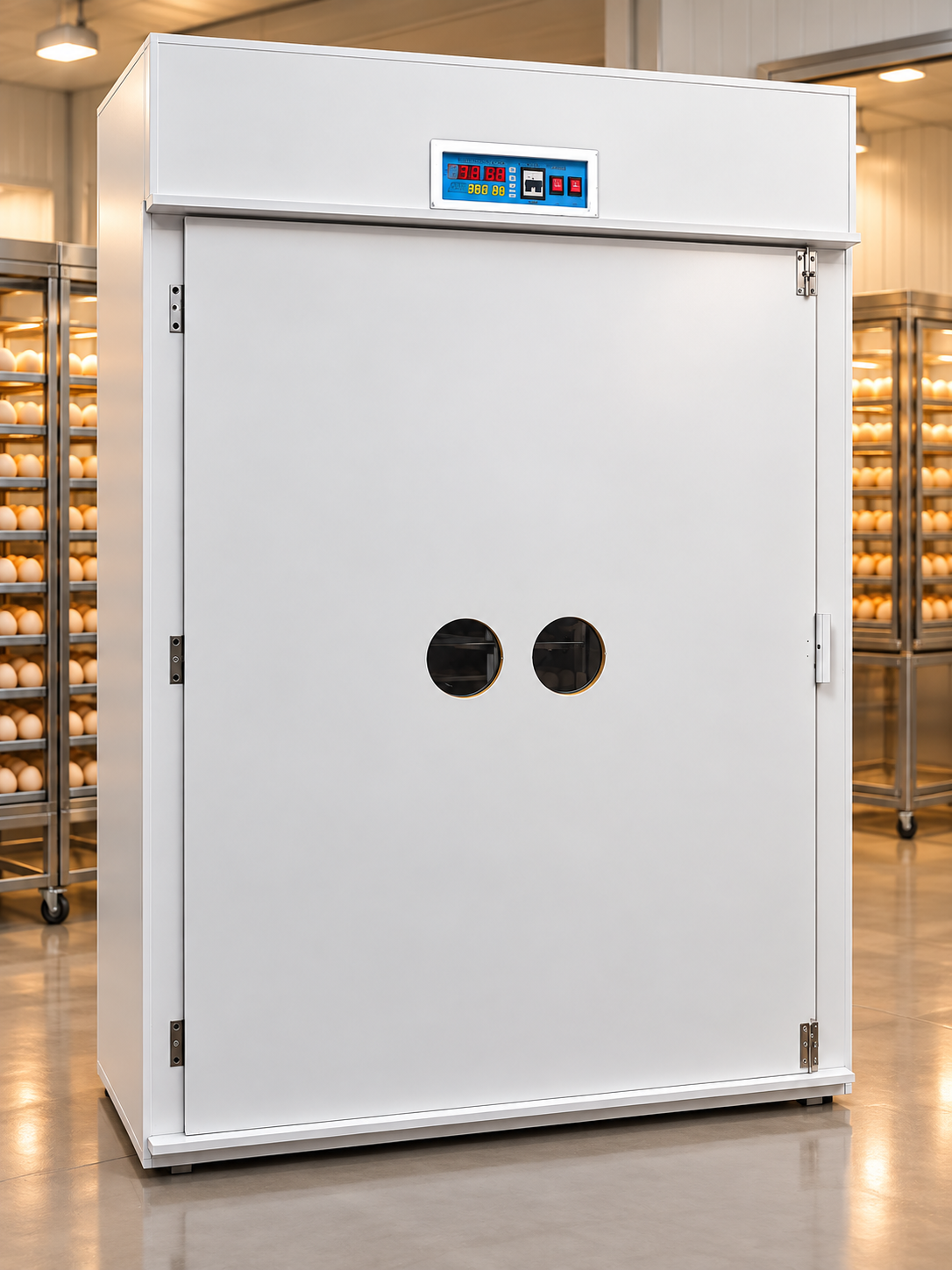
A manual incubator is cheaper to buy but costs you time and chicks. Here is how manual, semi-automatic and fully automatic incubators compare.
| Manual | Semi-automatic | Fully automatic | |
|---|---|---|---|
| Egg turning | By hand, 3β5 times a day | Lever or tray you tilt by hand | Automatic on a timer |
| Temperature | Thermostat, check often | Digital thermostat | Digital controller and fan |
| Humidity | Water tray, separate hygrometer | Water tray, display | Built-in control and display |
| Best for | Hobby hatches | Occasional hatches | Anyone selling chicks |
More detail in our egg turning guide.
Manual turning is fine for a dozen eggs on the kitchen counter. It breaks down at a few hundred eggs, when you are away from home, or when a missed night of turning drops the hatch rate. An automatic incubator turns every egg on time, every time, and holds temperature evenly with a fan. On a machine hatching hundreds of chicks per batch, a few extra percent hatch rate pays for the difference quickly.
All IncubatorPro models are fully automatic. See automatic egg incubators and the price list.
Every model has automatic turning, digital temperature and humidity control and a 2-year warranty. Pay cash on delivery or by EFT.
An incubator where you turn the eggs by hand and usually watch temperature and humidity yourself. It is cheaper but needs attention several times a day.
At least three times a day, and preferably five. Use an odd number so the eggs spend alternate nights on different sides.
If you hatch more than a few dozen eggs or sell chicks, yes. Automatic turning and digital control give steadier hatch rates and free up your time.